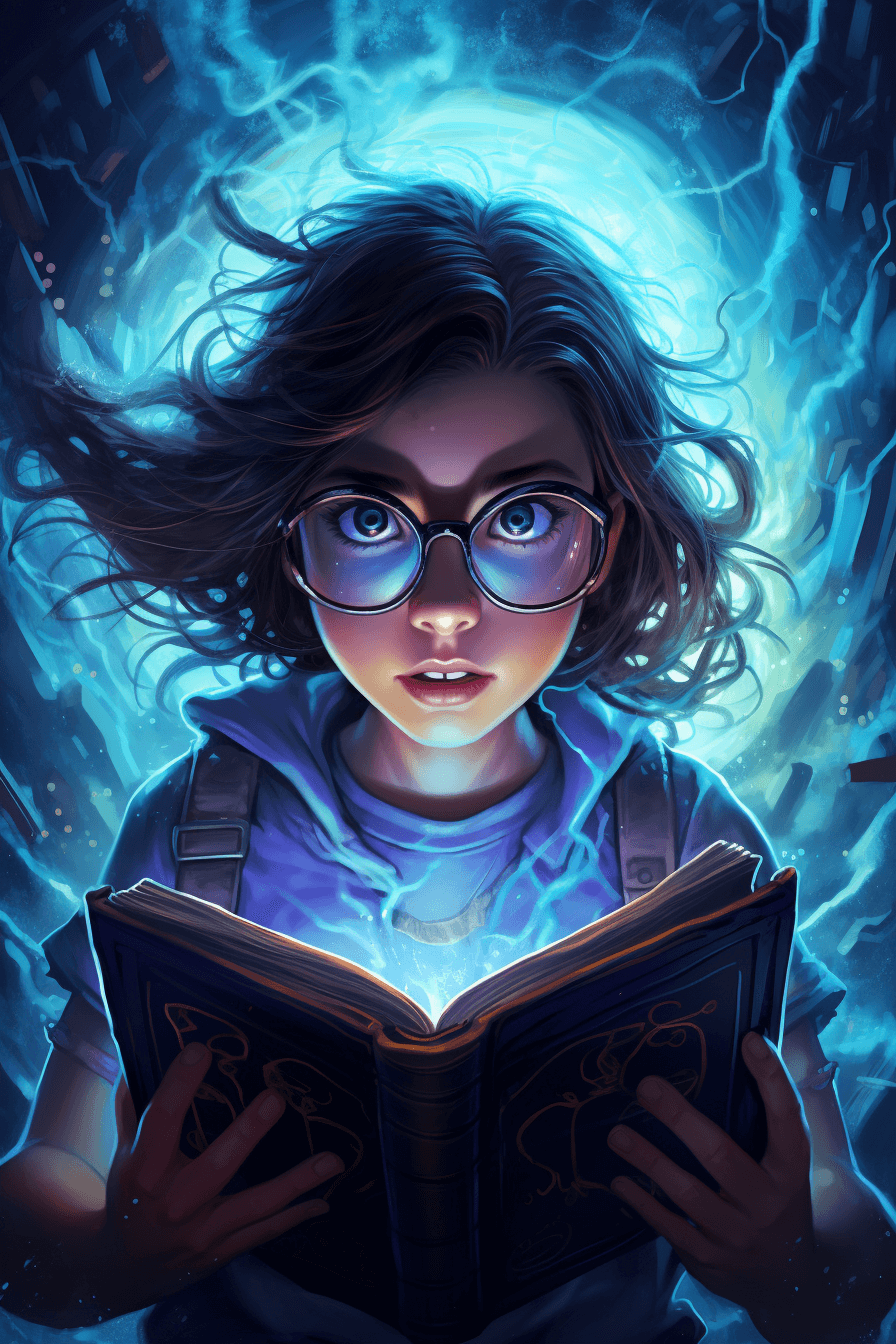
Image created in Midjourney by the author
First published: December 6, 2024 Paul W. Romero
A Preface:
As an aspiring writer, I’ve been struggling to find my voice and my audience. I’ve dedicated years to studying and practicing my craft. I’ve done market research as well as personal reflection. I’ve worked through trial and error. I’ve done a lot, but still I’m trying to find my voice.
I have primarily written in the speculative fiction genre with an emphasis on horror. That shifted towards science fiction and fantasy, and in recent months shifted again to middle grade fiction.
I enjoy writing dialogue with characters and fun stories that don’t take themselves too seriously. That’s not to say I can’t add horror and fantastic elements to my middle grade stories. Thus, I have embarked on this new path to see what it may bring. Along the way I have discovered insights into younger readers that I would like to share with anyone out there who may be interested in writing middle grade fiction as well.
I am not an expert in this subject matter, but I am eager to learn and share my findings with anyone that may find them beneficial.
Basic Metrics:
You can Google the criteria that define middle grade fiction. In a nutshell, here’s what you may find. Please note that different sources will skew slightly away from one another on these metrics, but this is a rough estimate based on the ones I’ve researched:

- Middle grade fiction is geared towards readers roughly between the ages of 8 and 12 years old.
- Middle grade protagonists that I have read are generally towards a higher age range around 12-years old.
- Middle grade fiction runs the length of around 30,000 to 50,000 words with some books going as high as 70,000 words (The Harry Potter Series). Your mileage may vary but this is a rough estimate. There are many resources out there that can guide you further on this (links at the end of this post).
- Middle grade themes tend to skew around the following topics:
- Family and friends
- Fun and humor
- Courage and adventure
- Growing up and belonging
- Love, loss, and grief
- Social issues such as fairness and injustice (this can be as big as human rights or something on a smaller scale like getting an unfair grade in class).
- A sense of wonder and excitement (take them to a new world outside of the ordinary one. It doesn’t have to be Narnia. It just has to instill wonder).
10 Tips to Master Middle Grade Fiction:
This is a list compiled from my research on the internet. The key is to familiarize yourself with the landscape to better navigate it should you decide to keep on the traditional path or take a detour.
- Make it fun, humorous, and engaging.
- Consider writing shorter sentences with less syllables.
- Give the reader less work to read. Make it simple, fast paced, and fun to read. Keep in mind that some readers will have shorter attention spans than others.
- Consider using jokes, rhymes, or easier to digest blocks of text.
- Remember the last time you read something online? Did you come across an article with long chunks of text that you either skimmed over or just ignored all together? Did you come across another article that made it easy for you to follow along?
- No profanity or graphic violence.
- Make outlandish horror improbable.
- Don’t make it real life violence or sexual in nature. You can still add elements of horror, but you may want to refrain from Michael Myers, Freddy Krueger, Jason Voorhees, Leatherface, Jigsaw…you see where I’m going with this. Think more like Goosebumps.
- Battles and fights are okay (The Chronicles of Narnia, The Lord of the Rings, The Harry Potter Series, and The Percy Jackson and the Olympians Series), but again I would suggest swaying away from graphic details.
- Kids are smart, but they are still kids. They can handle intensity but let’s not overdo it. Know your audience. Some can handle it and others not so much.
- Remember the last time you saw a horror movie with something too graphic for you to experience? How did it make you feel?
- Have sympathy for your sixth-grade self.
- Explore feelings of weirdness that most kids experience at this age. This can make your characters and story relatable.
- The one caveat I have is to be mindful of the intensity of these experiences and refer to the previous bullet point.
- Everyone has had a bully, a crush, a very embarrassing moment, confusion about life and the body, unanswered questions, first days at school, being the last one picked for a team, and so on.
- Family relationships are often front and center.
- Parents, siblings, friendships are the center of middle grade readers’ lives. They have yet to reach the level of life where they have to deal with bosses, bills, life and death, war, politics, and so forth.
- Granted some have endured more than we may know, but for the sake of argument, we tend to see middle grade themes centered around family and friendship. Who doesn’t want a family or friend? Well, unless you’re Ebenezer Scrooge from A Christmas Carol or George Baily from It’s a Wonderful Life.
- Don’t use outdated slang.
- This can date the novel unless you intend it to. Make the language modern, and not from your time. Again, this doesn’t apply if you’re intending to date your novel or make it historical fiction.
- Experiences are the same but pull them into modern times.
- Don’t preach.
- Don’t preach to the characters or the readers. Have the characters learn something through their own flaws. Allow the readers to experience this without lecturing them.
- Less lecturing and more fun.
- Not everything has to be a life lesson, but if the story calls for it then let it happen naturally. Don’t force your beliefs on the characters or the readers. Forcing this won’t make it any better and the characters won’t work, and the readers will notice.
- Don’t underestimate the reader’s intelligence.
- This may go against my previous points, but allow me to clarify:
- Kids are smarter than we may give them credit for. They understand things and what they don’t understand, they will figure out the answers.
- We want to keep our writing simple, fun, and easy to read, but we don’t need to patronize them.
- Don’t try to over explain things. The Harry Potter Series introduced us to a whole other world of magic without having to explain every little detail to us. The author respected us enough to know that if she gave us enough information, that we could fill in the rest ourselves.
- That’s the beauty behind good writing: Giving the readers an experience by giving them words to craft the images in their own minds to create their own visions and wonders.
- Don’t make the story so overly simple that it comes off boring (i.e., predictable plots, mysteries, and characters).
- Kids are reading about other kids. People like them are making their own choices.
- Make the main character relatable.
- Have you ever read a book about someone you couldn’t relate to? Did you feel connected to the story?
- What kind of character would be relatable to an eight- to twelve-year-old kid?
- Make the grown-ups useless (but not too useless).
- This is a debatable topic. We want the kids to be the heroes of our stories. To do that, the grownups cannot interfere. However, this rule can be broken or amended to fit a story’s needs.
- For example, Harry Potter is the hero of his story, but he still has help from his friends, family, and professors of the wizarding world. Contrast this to The Goosebumps Series, in which many of the heroes are kids who tackle their own fears with minimal to no grownup intervention.
- Read lots of middle grade fiction stories.
- You can use Google for any topic or book of your choice. I will let you decide on that, and I’m sure you have a few in mind that you’ve read or heard about.
- Check online forums, books stores, and other outlets to see what middle grade fiction is popular or trending.
- Some middle grade books I personally like include the following (I’m sure you’ve already heard of most of them):
- The Harry Potter Series by J.K. Rowling
- The Goosebumps Series by R.L. Stine
- The Nancy Drew Series by Carolyn Keene
- Harriet the Spy by Louise Fitzhugh
- The Bunnicula Series by James and Deborah Howe
- The Chronicles of Narnia Series by C.S. Lewis
- The Percy Jackson & the Olympians Series by Rick Riordan
- Matilda, Charlie & the Chocolate Factory, and James & the Giant Peach by Roald Dahl
- The Small Spaces Series by Katherine Arden
- The Keeper of the Lost Cities Series by Shannon Messenger (I haven’t read this series yet, but I keep seeing good reviews about it online).
Final thoughts:
“Books are a uniquely portable magic.” – Stephen King
“You can find magic wherever you look. Sit back and relax all you need is a book!” – Dr. Seuss
“If you don’t like to read, you haven’t found the right book.” – J.K. Rowling
“Many adults feel that every children’s book has to teach them something…. My theory is a children’s book… can be just for fun.” – R.L. Stine
“Books shouldn’t be daunting, they should be funny, exciting and wonderful.” – Roald Dahl
“Give the readers an experience by giving them words to craft the images in their own minds to create their own visions and wonders.” – Yours Truly
Further reading and resources:
Brody, Jessica. Save the Cat! Writes a Novel: The Last Book on Novel Writing You’ll Ever Need. New York, Ten Speed Press, 2018.
“How to Write a Children’s Middle Grade Book.” Penguin Random House UK, https://www.penguin.co.uk/articles/company-article/how-to-write-a-children-s-middle-grade-book. Accessed 25 Nov. 2024.
“Novel Writing.” Savethecat.com, https://savethecat.com/novel-writing. Accessed 25 Nov. 2024.
Patterson, Amanda. “10 Powerful Recurring Themes in Children’s Stories.” Writers Write, http://www.writerswrite.co.za/10-powerful-recurring-themes-in-childrens-stories. Accessed 25 Nov. 2024.
Smith, Steven K. “Middle Grade Novel Structure 101: Stuck in the Middle (Grade) with You.” Ingram Spark, https://www.ingramspark.com/blog/middle-grade-novel-structure-101-stuck-in-the-middle-grade-with-you. Accessed 25 Nov. 2024.
Snyder, Blake. Save the Cat! The Last Book on Screenwriting You’ll Ever Need. Studio City, Michael Wiese Productions, 2005.
Stine, R.L. “Writing Program.” The World of R.L. Stine, https://rlstine.com/writing-program. Accessed 25 Nov. 2024. White, Mary Gormandy, MA. “25 Most Common Themes in Children’s Literature.” Your Dictionary, http://www.yourdictionary.com/articles/childrens-literature-themes. Accessed 25 Nov. 2024.
Share this:
 Paul W Romero